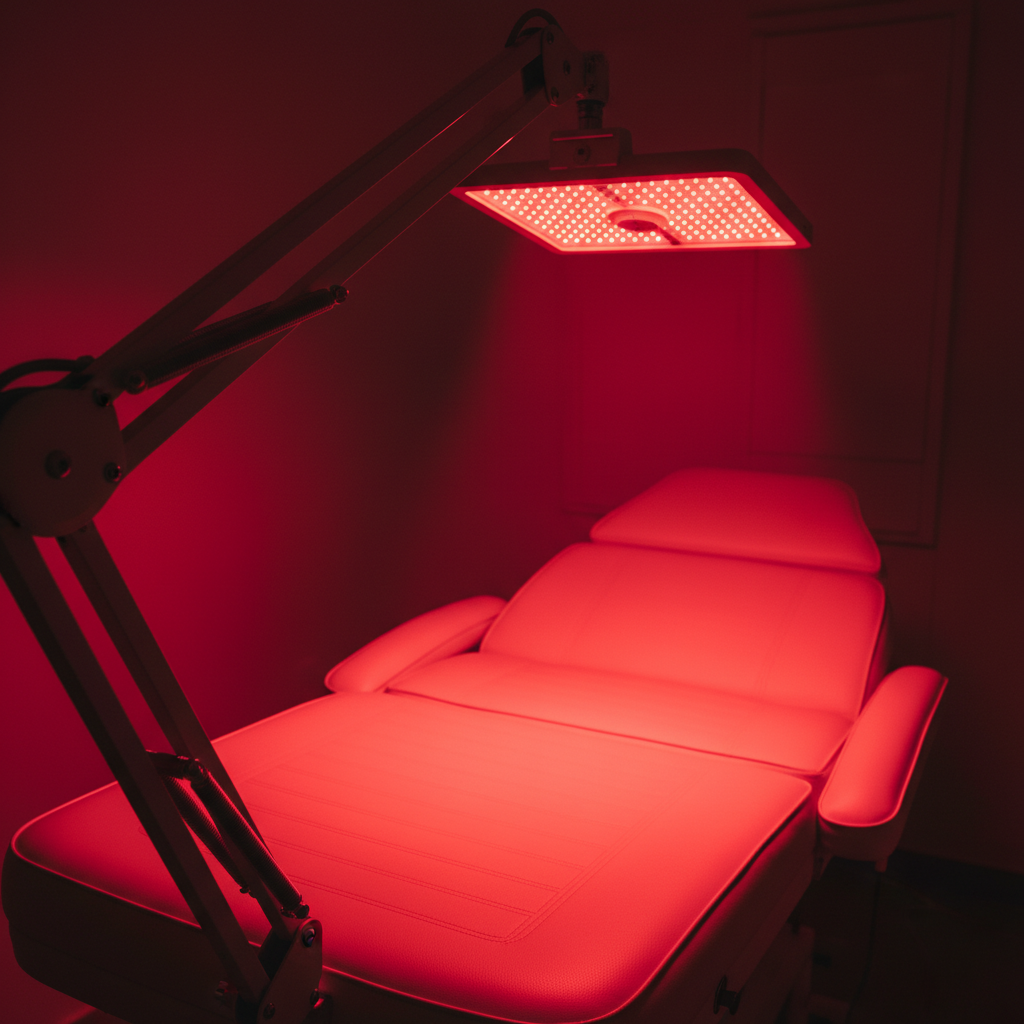
How LED Light Therapy Works
LED stands for light-emitting diode, and what makes it therapeutic is wavelength. Different wavelengths of light penetrate skin tissue to different depths and trigger different biological responses. This is called photobiomodulation — the use of light to stimulate cellular activity.
Unlike UV light, which damages cells, LED wavelengths in the red and near-infrared range are absorbed by cellular mitochondria (the energy-producing structures inside cells). This stimulates ATP production — essentially giving cells more energy to do their jobs: repair, regenerate, and reduce inflammation. There's no heat, no UV damage, and no recovery time required.
Red Light vs Near-Infrared: What's the Difference?
Most professional LED devices use a combination of wavelengths, and the two most clinically relevant for skin are red and near-infrared:
- Red light (630–700nm): Works primarily in the epidermis and upper dermis. It's particularly effective at reducing surface inflammation, calming reactive or rosacea-prone skin, stimulating collagen in the upper layers, and improving overall skin tone and radiance
- Near-infrared light (800–1000nm): Penetrates deeper into the dermis and underlying tissue. At this depth it improves microcirculation, accelerates tissue repair, and supports collagen remodelling deeper in the skin — which matters for firmness and structural aging concerns
Combined, they address both surface skin quality and deeper structural health — which is why professional LED panels typically include both wavelengths.
What Okanagan Clients Are Actually Seeing
The Okanagan climate — high UV index summers, dry winters, significant temperature swings — creates specific skin challenges. Chronic sun exposure drives inflammation and hyperpigmentation. Dry air pulls moisture from skin year-round. LED addresses several of these consistently:
- Reduced redness and reactive skin: Clients with rosacea or chronic redness often see significant calming after a series of sessions
- More even tone: Improved cellular turnover and reduced inflammation gradually even out hyperpigmentation and sun damage
- Improved skin texture and firmness: Consistent collagen stimulation over weeks and months produces measurable improvement in skin density
- Faster recovery after other treatments: LED after microneedling or chemical peels reduces inflammation and speeds healing — which is why many clients book it as an add-on
- Better baseline skin health: Regular clients report that their skin simply functions better — less reactive, holds moisture better, recovers faster from environmental stress
What a Session at Nuvera Feels Like
LED therapy is one of the most low-effort treatments you'll do. You lie comfortably under a panel (or wear a mask-style device, depending on the setup), close your eyes, and relax for 20–30 minutes while the light does its work. There's no heat, no sensation beyond a mild warmth, and nothing to do afterward — no products to avoid, no sun restriction beyond normal sun protection practice. You can go straight back to your day.
Standalone sessions are $40. Many clients pair LED with a hydrofacial or use it as an add-on to microneedling for combined benefit.
The Nuvera Glow Plans — Making LED a Habit
LED therapy's effectiveness is cumulative. A single session has benefits, but the real results come from consistency. To make regular LED sessions practical and affordable, Nuvera offers monthly Glow membership plans:
- $129/month — covers a set number of LED sessions per month at a reduced per-session rate
- $225/month — higher frequency for clients who want to prioritize LED as a cornerstone of their routine
Members also get preferred booking and can pair sessions with other treatments at reduced add-on rates. For clients managing ongoing inflammation, post-sun-season skin recovery, or anti-aging maintenance, a Glow plan is typically the most cost-effective path to consistent results.
Who Benefits Most from LED Therapy
LED is one of the most inclusive treatments available — there are almost no contraindications, and it's suitable for all skin types and tones. That said, it tends to deliver the most visible results for:
- Clients with rosacea, chronic redness, or reactive skin
- Those managing mild to moderate acne (blue light variants also help with bacterial acne)
- Clients over 50 who want collagen support without intensive treatments
- Anyone recovering from a more intensive treatment like microneedling or a chemical peel
- People who want a low-maintenance way to support ongoing skin health between more active treatments
Try LED Therapy at Nuvera Aesthetics in Vernon
Book a standalone LED session or ask about the Glow membership plans when you call or book online. It's the easiest treatment to add — and one of the most consistently rewarding ones.
Book Now •